
Fitness
Tempo Training: The Basics And The Science-Backed Benefits
For some reason, we tend to think life is linear. We like to think that things progress in a steady line upward, but when you really think of that, very little, possibly nothing, truly works that way.
And, the same is true for weightlifting.
If you were to only experience gain after gain, never losing ground, never plateauing, this would be abnormal to say the least.
So then, what do you do when such plateaus inevitably happen? How do you break through those plateaus to get back on the road to gainesville?
Such a solution to this commonly needed breakthrough is found in tempo training!
Read on to find out what this method of training entails and how you can benefit from incorporating tempo training into your workout sessions.
Tempo Training Basics
A plateau-buster, you say? Better gains, you say? Well, just what is tempo training? …I’m glad you asked.
With tempo training, movements are generally broken up into four parts or phases, and each phase is assigned a number. Each number represents a specific phase of movement.
These numbers refer to the number of seconds it should take for you to complete that phase of movement before progressing onto the next movement.
The phases of tempo training movements are always written in the following order, though it is important to keep in mind that not all exercises follow this order, forcing the phases to be switched up to accommodate the given exercise.
We’ll explain this in greater depth in a moment, but first let’s take a look at the 4 phases:
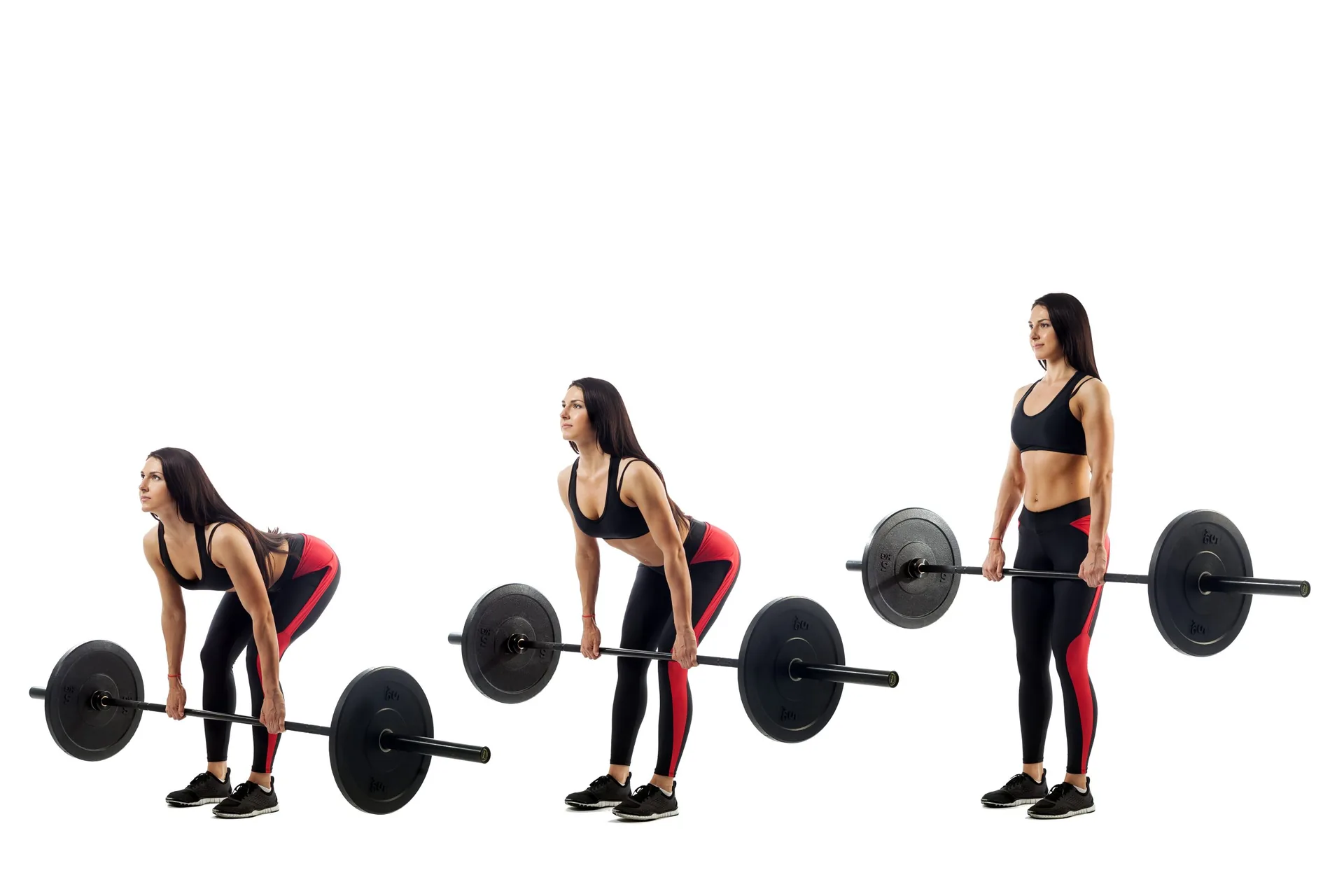
1. The Eccentric Phase – This phase is also known as the lowering phase, as it refers to lowering movements (like when you lower your body while doing a squat).

2. Isometric Phase 1 – This phase is the pause at the bottom of the lowering position of the eccentric phase. For instance, the pause at the bottom position of a squat.
3. Concentric Phase – This phase is the lifting phase. In tempo training, the number assigned to this phase signifies the number of seconds, or counts, it should take you to move from the bottom position back up to the standing position (as in a squat). If the number in this phase happens to be zero, you would execute the return to the standing position of a squat in a plyometric manner, in other words, explosively.
4. Isometric Phase 2 – This phase is the pause at the top of a movement, where you are back at the starting position. The number associated with this phase indicates how long you should pause or wait before beginning your next rep.
So then, what does this look like, numbers included? And, what if you’re doing a movement that doesn’t begin with a lowering motion?
Let’s address that second question first.
If you’re doing a movement that doesn’t involve lowering your body first, such as a pullup, simply switch the first and third phases. In the case of a pullup, you’re obviously raising your body first, then lowering your body.
So, whereas with a squat you’d lower-pause-lift-pause, with a pullup, you’d lift-pause-lower-pause.
And now, let’s add in some numbers to see how this plays out.
Consider the following sequence for a squat: 2323
Incorporating tempo training here, you’d take 2 seconds or two counts to slowly lower your body in the squat to the bottom position. There, you’d pause for 3 counts before taking 2 counts to lift your body back to the starting position, where you’d pause for another 3 counts before beginning another rep.
- Know that if you’ve been lifting heavy weights, heavy enough that such slowed movements wouldn’t be possible, you’ll need to opt for lighter weights to begin.
- In time, it is recommended that you increase the count of the eccentric phase, focusing on controlling your movements.
- Experimentation with numbers (or speeds) may be required to see what works best for you, bringing you the gains you seek.
Easy peasy, right? Well, at least reading it sounds simple enough, we’ll save the real work for the gym.
But, before you grab your weights, let’s explore the benefits you stand to gain from tempo training.
Benefits Of Tempo Training According To Science

1- Better Form, Better Balance
Tempo training can improve your form, balance, and mental strength.
As you slow movements and focus on each repetition, this hyperfocus consequently improves both form and balance.
Think of it as practicing mindfulness as you do each rep, causing you to have a greater awareness of your movements.
2- Reduces Threat Of Injury
We’re listing this benefit in order, behind better form and balance, because likely the most notable result of improving these areas is a reduced threat of injury.
We mentioned above that better form and increased balance creates an increased awareness of how you’re moving your body, and this helps to keep you from injury.
With tempo training, when you lift, you have more control over your movements and you understand those movements which improves technique (form), again helping to keep you injury-free.
3- Identifies & Overcomes Weakness
Tempo training is like watching tape for basketball coaches and players. When they slow down or pause the video, they identify areas of weakness that can then be worked on and overcome.
And, the same is true of tempo training.
Slowed, focused movements help you to break down each part of that movement, allowing you to work on points or positions that need a little (or a lot of) work.
By identifying positional weaknesses, you can work on improving these to gain an overall stronger lift.
4- Gains Through Tension
The slowed movements incorporated in tempo training mean that you’ll be putting your muscles under more stress as they’ll spend a greater amount of time under tension.
This increase in tension and stress to your muscles then equates to greater gains, as I’m sure you know that muscles require such stress for growth.
5- Increases Mental Strength
Tempo training requires discipline, both physically and mentally.
Slowing movements and focusing on form helps you to block out the mental and physical fatigue that wars against your mind and body, telling you to quit.
As you continually resist that voice, you improve your mind-muscle connection and develop a greater confidence which increases your strength mentally.
Perhaps you’ve heard marathoners speak of focusing on their breath throughout a run, ignoring the pain (not from injury) and pushing through to accomplish a goal. This then serves them in later runs, their mental strength having improved.
The same is true of tempo training, as you train your mind and body to “focus on each aspect of the move in turn, breaking each lift down to its core components” thereby challenging yourself and strengthening your mindset in the process.
6- Variety
It’s the spice of life, right? And, like life, even lifting can become monotonous, leaving you desiring a bit of variety.
Adding in this style of training to your workouts can take the same movements you’ve been doing, and probably enjoy already, and shift your focus to improving specific lifts.
This slight switch up not only improves your movements and increases strength, but by adding a challenging element through tempo training that your body will be forced to adapt to, you’ll also feel that spice, that variety, that we all crave in life (and in workouts).
7- Work Capacity
When you slow your movements, this increased focus inevitably requires you to lessen the amount of weight that you were typically lifting prior to incorporating tempo training.
Lifting a lower weight, or percentage, of your one rep max means that you’ll be doing more reps and more sets than you were when you were strictly doing heavy lifting.
And, this benefits your workout by increasing your capacity to work, developing this capacity through the amount of volume you’ll be adding to your workouts.
8- Increases Body & Movement Awareness

As you incorporate tempo training, you become increasingly conscious of each part of the movement. Essentially, you gain control of your body’s movements.
While the overall objective is fluid motion, these slowed movements help you to understand your body’s position at each and every phase of the movement. And, when you’re sensing exactly how your body moves, consistency improves as well.
9- Training Progress
More, more, more isn’t always best, best, best. And, with tempo training you can progress your training even when adding more weight or more reps isn’t feasible.
Slowing your movements can help you to continue achieving your desired gains, progressing in your training, even breaking through common plateaus.
Fitness
What 10 Minutes of Walking Immediately After Meals Does to Your Blood Sugar?
Blunting that spike doesn’t require intense cardio or an hour at the gym. A simple 10-minute walk right after eating changes everything.

You finish lunch, clean up your plate, and sit right back down at your desk or collapse onto the couch. Within an hour, a wave of heaviness hits, leaving you sluggish and hunting for an afternoon snack.
This post-meal slump isn’t just about digestion—it’s driven by a sudden spike in your blood sugar. Luckily, blunting that spike doesn’t require intense cardio or an hour at the gym. A simple 10-minute walk right after eating changes everything.
“I used to get so sleepy after lunch that I could barely keep my eyes open during afternoon meetings. Taking a quick 10-minute stroll around the block sounded too simple to work, but my energy hasn’t crashed once since I started.” — Rachel Vance, 41, Accountant
1. Your Muscles Act Like “Glucose Sponges”
When you digest food, your body breaks carbohydrates down into glucose, which enters your bloodstream. Normally, your pancreas has to release a flood of insulin to move that sugar out of your blood and into your cells.
When you contract your leg muscles by walking, those muscles soak up glucose directly from your blood for instant fuel—without needing extra insulin. This mechanism keeps your blood sugar curve smooth and flat instead of sharp and elevated.
2. You Stop the “Spike-and-Crash” Cycle
Sitting still after a heavy meal allows glucose to pool in your bloodstream, creating a steep peak followed by a dramatic drop. That sudden crash is what triggers intense cravings, brain fog, and irritability around 3 PM.
Moving right away keeps your circulation active, spreading out energy delivery so you stay alert without the sudden drop.
“My doctor recommended a short post-meal walk to manage my sugar levels. It takes almost no effort, but my daily energy is noticeably more consistent.” — Arthur Pendelton, 62, Retired Administrator
3. How to Make the 10-Minute Habit Stick
-
Timing beats intensity: You don’t need to power-walk or break a sweat. A casual, easy-paced stroll works perfectly, as long as you start within 15–20 minutes of finishing your meal.
-
Keep it flexible: Bad weather? Pace around your living room, walk up and down a hallway, or tidy up the kitchen. Any light movement counts.
-
Anchor it to lunch: Make it a rule that your workday break ends with a brief 10-minute loop outside before you sit back down at your computer.
Fitness
When Was the Last Time You Gave Your Brain Something New to Solve?
We wake up, answer messages, work through familiar routines, and make many of the same decisions we’ve made before.

Fitness
Why So Many People Wake Up Tired — Even After a Full Night’s Sleep
Ever wake up after what should have been a good night’s sleep… only to feel like you could go right back to bed?


What 10 Minutes of Walking Immediately After Meals Does to Your Blood Sugar?

The 60-Second Reset #01: A 10-Second Fix for Screen-Strained Eyes

Hot vs Cold Therapy: Harnessing Thermal Stress for Metabolic and Mental Resilience

The Vagus Nerve & Nervous System Regulation: Taming the Unseen Stress Response

The 50+ Turning Point: Why Midlife is Ground Zero for Long-Term Vitality

What’s One Piece of Health Advice That Actually Worked for You?

Can Small Sleep Changes Improve Mental Sharpness? Here’s What Researchers Are Learning

The Optical Dilation Trick: How Expanding Your Vision Resets Desk Eye Strain and Anxiety
The Vagus Nerve & Nervous System Regulation: Taming the Unseen Stress Response
Hot vs Cold Therapy: Harnessing Thermal Stress for Metabolic and Mental Resilience
-

 Fitness3 months ago
Unexpected Health Habit: Not a Diet or Supplement – Just One Everyday Habit Worth Noticing
-
 Health4 months ago
What Your Hands Quietly Reveal About Your Digestion (And How To Use It)
-
 Fitness4 months ago
5 Health Myths Most Adults Still Believe And What Actually Matters Instead
-

 Health3 months ago
Have You Ever Wondered Why Homemade Meals Rarely Taste the Same?
-
 Fitness4 months ago
Experts Reveal: The 1-Minute Routine That Improves Digestion Instantly
-
 Health3 months ago
“Lazy Meal Prep”: The easier way people are actually sticking to healthy eating
-
 Health4 months ago
You Slept 8 Hours… So Why Do You Still Feel Exhausted?
-

 Health2 months ago
How Many Steps a Day Actually Matter for Longevity – 5K or 15K?