
Fitness
Foam Rolling: The Gain Behind The Pain
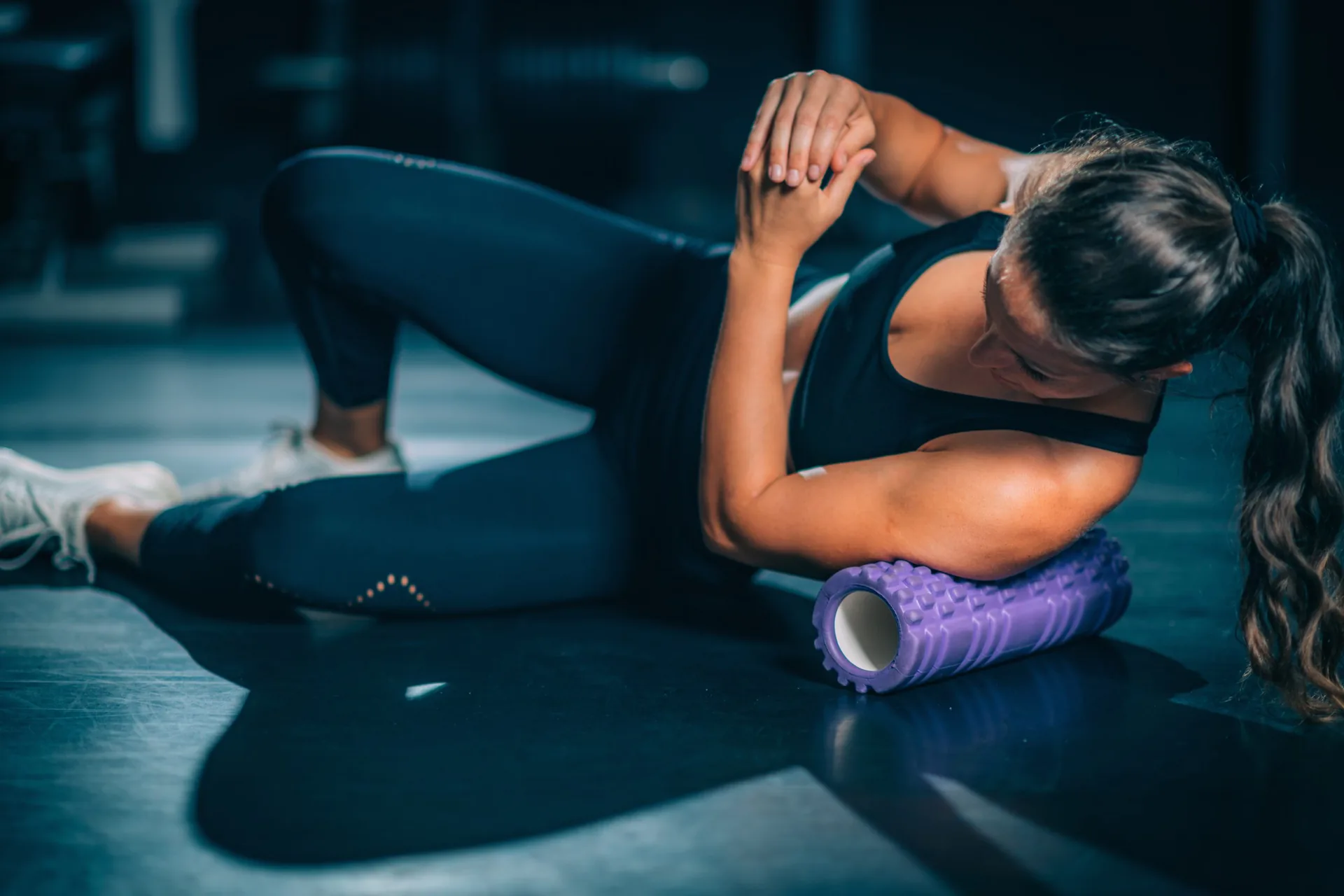
After a workout are you plagued with…
Sore muscles?
Tight muscles?
Decreased mobility?
Time spent in the gym can bring great gains, but those gains can often be accompanied by pain.
Foam rolling, though the practice itself can be painful at times, can make those gym gains even more effective by relieving soreness, pain, tension, and tightness while increasing mobility, flexibility, and aiding in recovery.
And, foam rolling isn’t just for relieving pains associated with working out!
Back pain, neck or leg pain from sitting at a desk all day, even fibromyalgia pain can be relieved through foam rolling.
Here we’ll explore the practice, the how-to, the how not-to, and all the benefits you stand to gain through foam rolling.
What Is Foam Rolling?
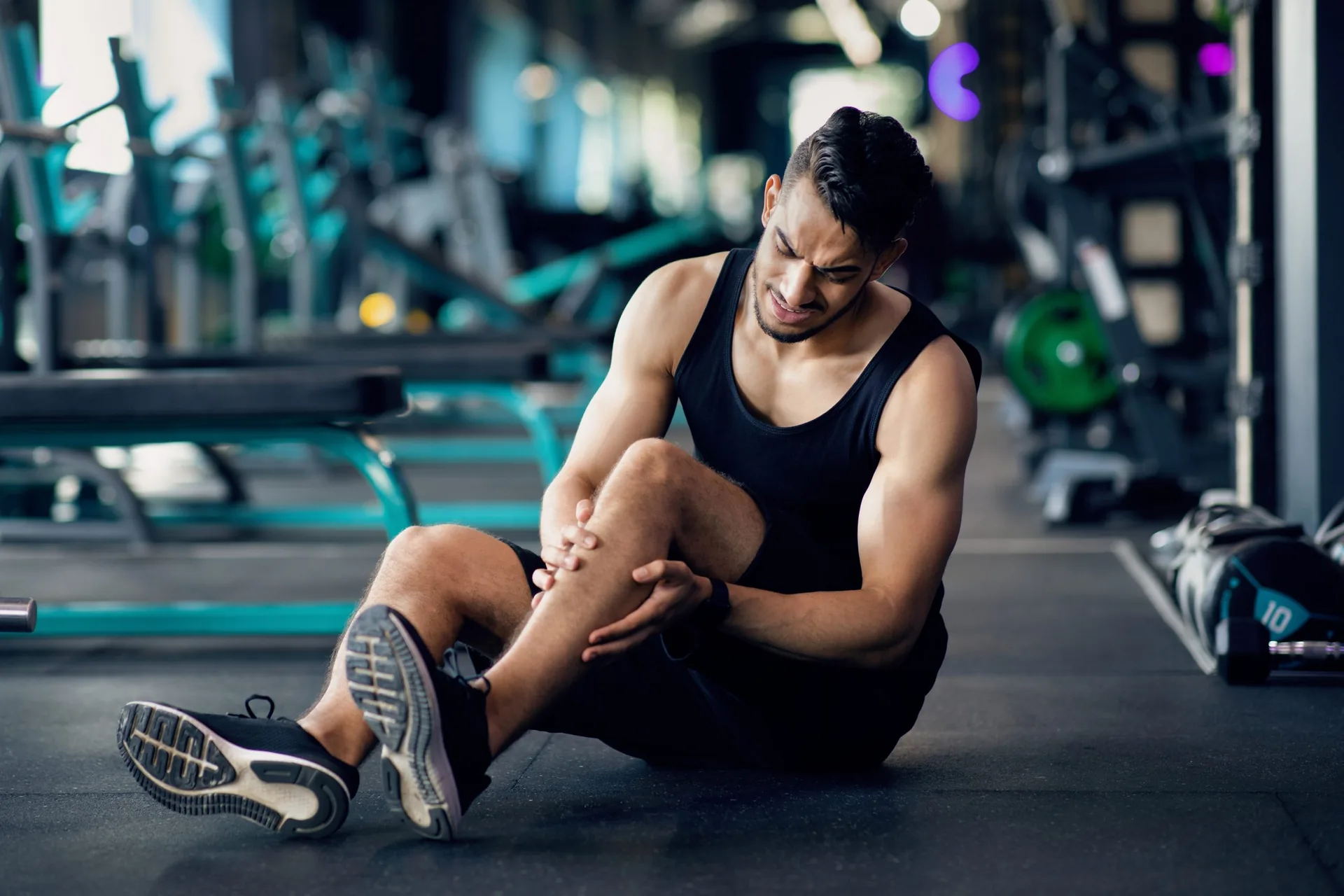
Over time, with frequent workouts or even general strenuous activity, from overuse and repetition, your muscles and the tissues that surround them can become weakened, tight, and even sore.
Foam rolling is a type of myofascial release that can be used to help ease this soreness, while also increasing range of motion and flexibility, and much more (which we’ll detail momentarily).
In the case of foam rolling, as opposed to chiropractic care and other therapies, you are performing the technique, which is why you may have heard this practice referred to as self-myofascial release or SMR.
Some find this practice to be uncomfortable, as foam rolling tight, sore muscles can bring a bit of pain, but this small amount of pain can bring great gain!
Foam rolling, or self-myofascial release works by applying pressure to myofascial tissue, the fascia, which is a fibrous tissue made of collagen.
This tissue surrounds your muscles, holding them in place and helping them move with ease.
As you use your foam roller on these tight, sore areas, your nervous system is stimulated, signaling your body to relax these tissues (your muscles and the surrounding fascia).
As you foam roll, blood flow increases to the area, and this delivers oxygen and needed nutrients to the affected muscles, tendons, and fascia.
And, in recovery, foam rolling can prompt the removal of built up waste, such as lactic acid, which can accumulate in muscles post-workout.
Foam rollers come in numerous sizes and shapes.
Perhaps you’ve seen the smooth rollers that essentially look like a shortened pool noodle but are more thick, dense, and serve an entirely different purpose. These are the most basic type of foam roller.
Or, maybe you’ve seen rollers that aim to give you a bit more control, often longer and more thin, made of plastic, foam, or even wood.
Then, for the more advanced roller, textured rollers containing ridges, treads, or balls can work on deeper tissues to relieve tight spots or knots.
To use a foam roller:
- Usually foam rolling is done pre or post workout session. You can also use a foam roller to control chronic pain, such as back pain or fibromyalgia pain.
- Most experts agree that foam rolling should concentrate on one area or muscle group at a time, and the longer your intervals of rolling the better.
- Slowly foam roll one muscle at a time.
- Move back and forth, rolling for 1-2 minutes. If needed, you can take a short break, then repeat this on the same muscle group/area.
- Do not roll too harshly as this can cause damage to the area.
- If you feel pain (worse than the muscle pain or soreness you are attempting to relieve through foam rolling), stop foam rolling.
Avoid the following when using a foam roller:
- Try not to foam roll directly on a painful spot. For instance, if you feel pain in an area, seek to roll away from this spot, focusing more on the larger region. In other words, you’re seeking to address the indirect area as opposed to targeting the direct source of the pain.
- Be sure your movements are slow and focused, avoiding the temptation to move too quickly. Quick movements deny your muscles adequate time to react and even adapt to the compression.
- Similar to the first point here, don’t spend a lot of time on a specific “knot” or spot. Focus on the region instead. Applying excessive pressure for a prolonged time to one spot may cause damage.
- Do not foam roll a serious injury such as a fracture or muscle tear.
- Avoid rolling small joints such as your knees, elbows, and ankles.
- Talk to your doctor before foam rolling in the later trimesters of pregnancy.
Now onto the gains you can obtain through foam rolling…
1- Reduce Muscle Soreness
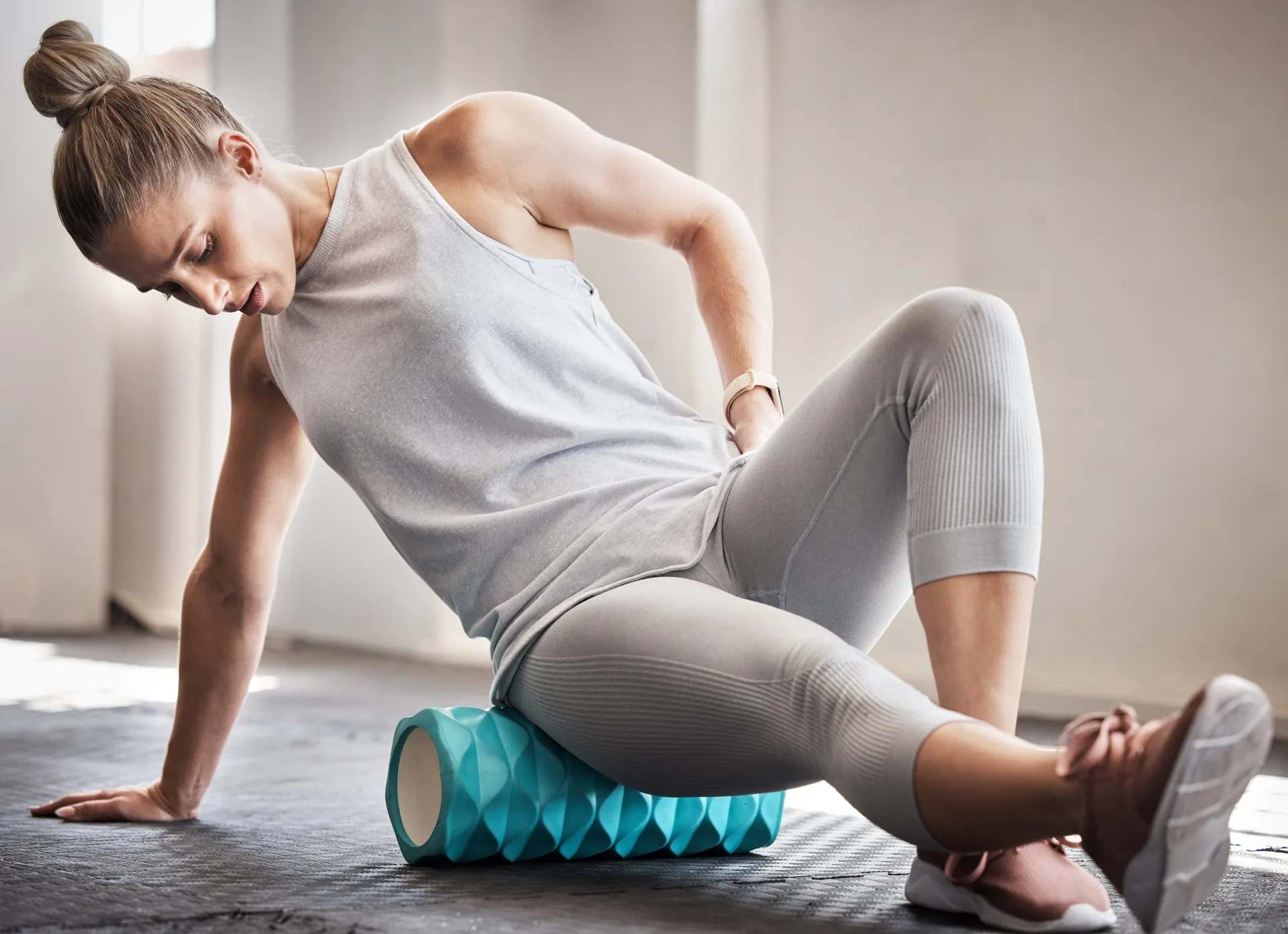
Perhaps the most noted and obvious benefit of using a foam roller is the potential to relieve muscle soreness after a workout.
Foam rolling relaxes the tissues supporting the muscle, decreasing inflammation that can cause soreness.
As you workout, your muscle tissues become damaged. Your body then repairs that damage which in turn works to build muscle.
But, as collagen molecules form to aid in repair, they can bind between layers of muscle thus forming adhesions if the tissue isn’t moved properly throughout this process.
Foam rolling works to move these tissues and prohibit the forming of these adhesions that can cause limited mobility, weakness, and muscle soreness.
2- Relieve Pain
I know, it seems that we just covered pain. But, there’s a difference between general pain and the soreness that occurs post workout.
The point above relayed the benefit of foam rolling to post-workout muscle soreness, here let’s see how foam rolling can aid in the reduction of localized and chronic pain.
First, let’s look at sciatica pain. This type of pain is caused by compression on the sciatic nerve.
Foam rolling helps to loosen tissues and prevent the characteristic compression that causes sciatica pain.
In cases of fibromyalgia, studies have shown foam rolling to decrease pain intensity, fatigue, and stiffness while increasing overall range of motion.
And, with back pain, loosening stiff myofascial tissue through foam rolling can indirectly reduce pain.
*When using a foam roller on your back, be careful not to strain or further injure your back.
3- Increase Flexibility
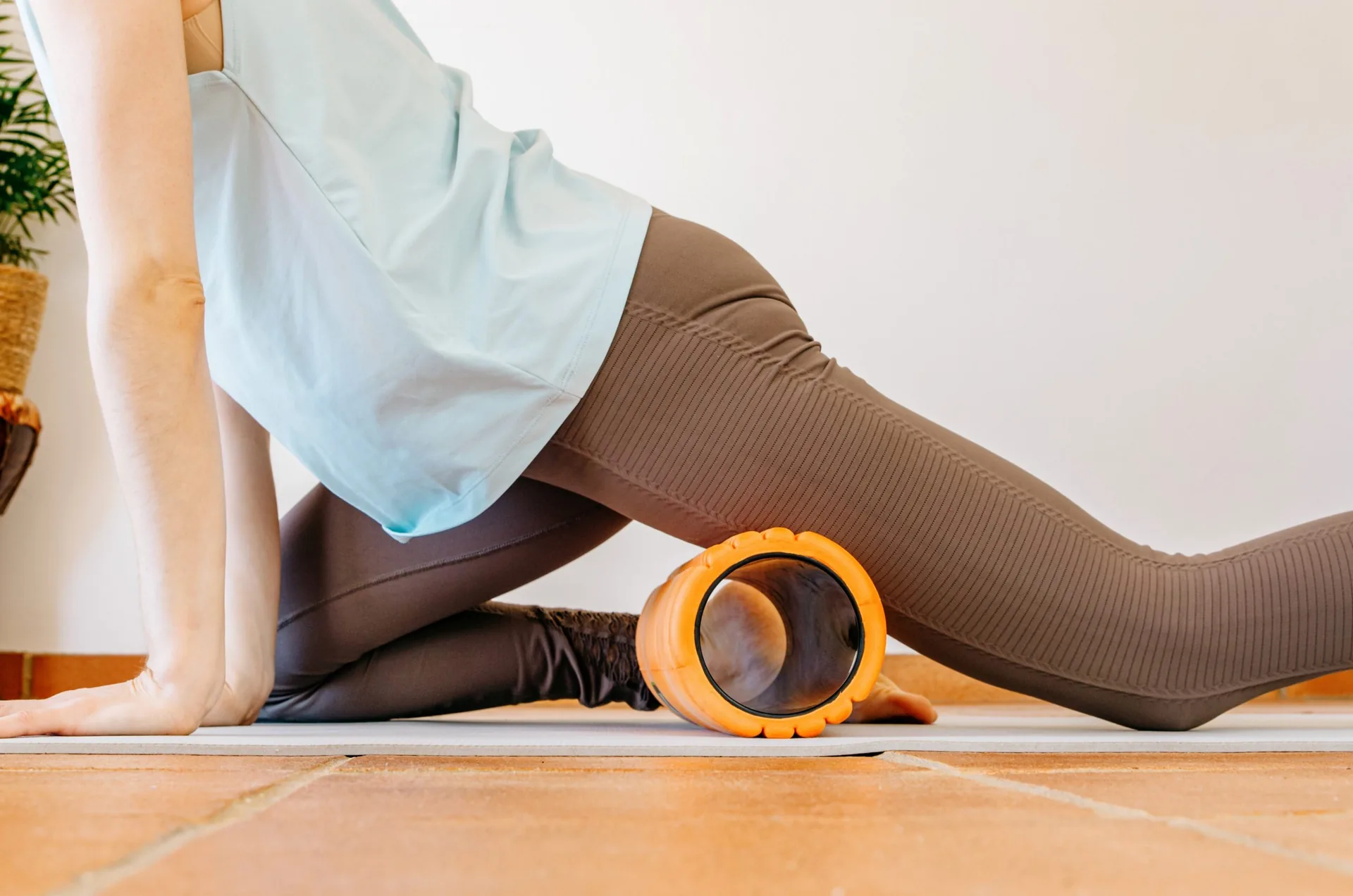
Foam rolling can reduce tightness and tension in muscle tissues which works to increase the range of motion in your joints.
As connective tissues loosen due to the pressure applied in foam rolling, both muscles and joints are then able to move more freely.
Studies have shown foam rolling for just two minutes in the quadricep muscle improved the range of motion in the hip flexors.
Some people choose to foam roll before working out as a way to warm up due to the benefit it brings in regards to flexibility and range of motion (which can improve performance).
4- Relaxation
As you relieve tightness that builds up in your muscles, you may even feel more relaxed after a foam rolling session.
This benefit is most widely noted when foam rolling is done as part of a post-workout cool down.
To allow tight muscle tissues to relax, focusing on a tight area for around 90 seconds is recommended.
5- Improve Circulation
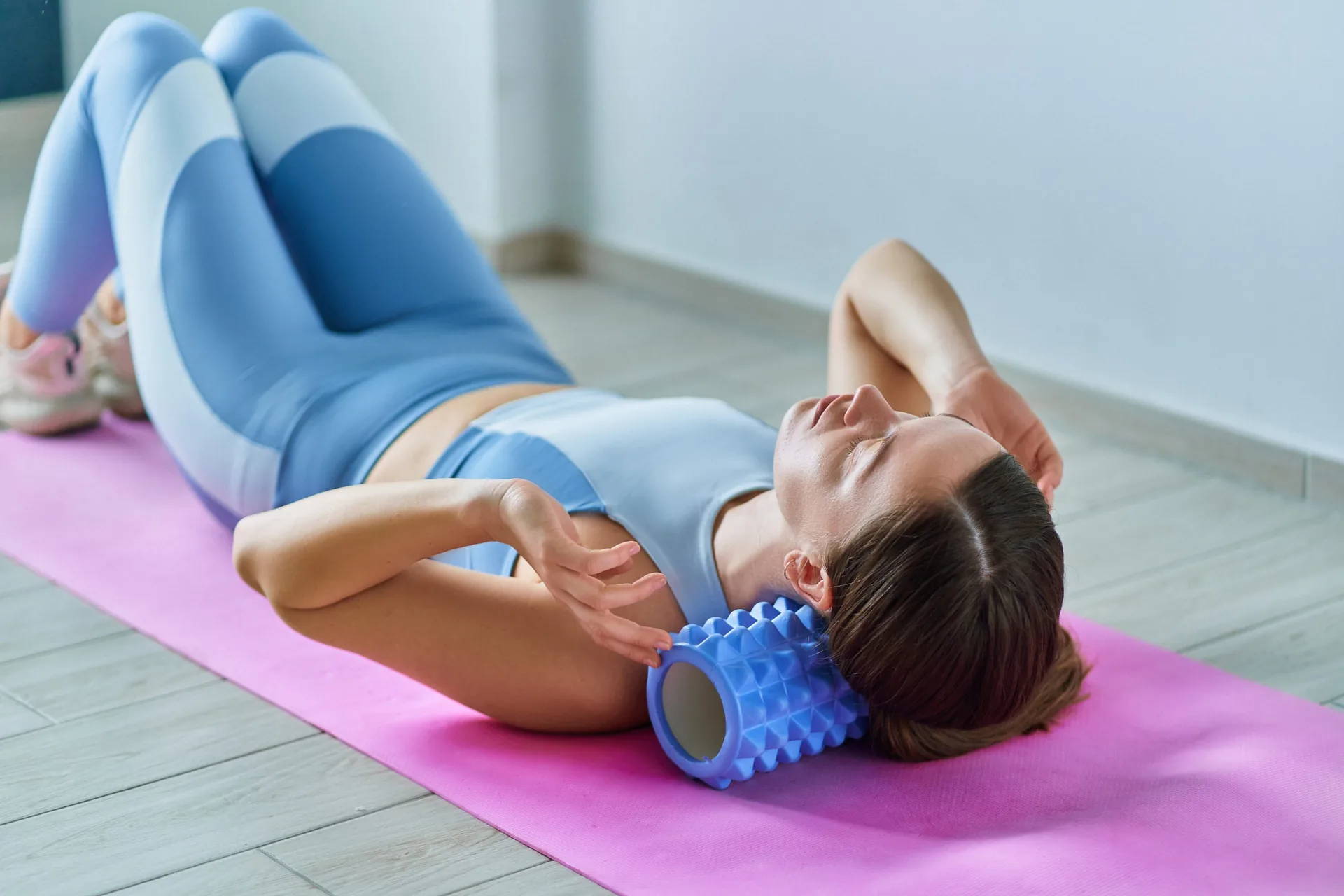
If the tissues surrounding your muscles become too tight, they can restrict blood flow to the area.
When blood flow is restricted, oxygen and needed nutrients can’t get to the muscle.
Loss of feeling or numbness can even occur if blood flow is restricted for long periods of time.
Foam rolling works to release tension or tightness in the tissues connected to your muscles allowing needed space for your blood vessels to expand, increasing blood flow.
The practice of foam rolling can actually improve overall circulation as well, aiding in mental clarity and cognitive functioning when performed regularly.
6- Injury Prevention & Recovery Aid
Foam rolling for back pain can alleviate pressure on the spine granting you more mobility in your back which can reduce your risk of injury.
Muscle fatigue due to exercise can also lead to injury, and foam rolling post-workout can alleviate this type of fatigue.
Then, to add to that, after an intense workout, metabolic waste, such as lactic acid can build up in your muscle tissue.
Foam rolling increases blood flow to the area which allows such waste to be pumped out and oxygen/nutrients to better reach those tired, worked muscles, which improves the overall recovery process.
And, when recovery is improved, you can perform again sooner, and better, potentially allowing you to become fitter, faster.
Fitness
What 10 Minutes of Walking Immediately After Meals Does to Your Blood Sugar?
Blunting that spike doesn’t require intense cardio or an hour at the gym. A simple 10-minute walk right after eating changes everything.

You finish lunch, clean up your plate, and sit right back down at your desk or collapse onto the couch. Within an hour, a wave of heaviness hits, leaving you sluggish and hunting for an afternoon snack.
This post-meal slump isn’t just about digestion—it’s driven by a sudden spike in your blood sugar. Luckily, blunting that spike doesn’t require intense cardio or an hour at the gym. A simple 10-minute walk right after eating changes everything.
“I used to get so sleepy after lunch that I could barely keep my eyes open during afternoon meetings. Taking a quick 10-minute stroll around the block sounded too simple to work, but my energy hasn’t crashed once since I started.” — Rachel Vance, 41, Accountant
1. Your Muscles Act Like “Glucose Sponges”
When you digest food, your body breaks carbohydrates down into glucose, which enters your bloodstream. Normally, your pancreas has to release a flood of insulin to move that sugar out of your blood and into your cells.
When you contract your leg muscles by walking, those muscles soak up glucose directly from your blood for instant fuel—without needing extra insulin. This mechanism keeps your blood sugar curve smooth and flat instead of sharp and elevated.
2. You Stop the “Spike-and-Crash” Cycle
Sitting still after a heavy meal allows glucose to pool in your bloodstream, creating a steep peak followed by a dramatic drop. That sudden crash is what triggers intense cravings, brain fog, and irritability around 3 PM.
Moving right away keeps your circulation active, spreading out energy delivery so you stay alert without the sudden drop.
“My doctor recommended a short post-meal walk to manage my sugar levels. It takes almost no effort, but my daily energy is noticeably more consistent.” — Arthur Pendelton, 62, Retired Administrator
3. How to Make the 10-Minute Habit Stick
-
Timing beats intensity: You don’t need to power-walk or break a sweat. A casual, easy-paced stroll works perfectly, as long as you start within 15–20 minutes of finishing your meal.
-
Keep it flexible: Bad weather? Pace around your living room, walk up and down a hallway, or tidy up the kitchen. Any light movement counts.
-
Anchor it to lunch: Make it a rule that your workday break ends with a brief 10-minute loop outside before you sit back down at your computer.
Fitness
When Was the Last Time You Gave Your Brain Something New to Solve?
We wake up, answer messages, work through familiar routines, and make many of the same decisions we’ve made before.

Fitness
Why So Many People Wake Up Tired — Even After a Full Night’s Sleep
Ever wake up after what should have been a good night’s sleep… only to feel like you could go right back to bed?


What 10 Minutes of Walking Immediately After Meals Does to Your Blood Sugar?

The 60-Second Reset #01: A 10-Second Fix for Screen-Strained Eyes

Hot vs Cold Therapy: Harnessing Thermal Stress for Metabolic and Mental Resilience

The Vagus Nerve & Nervous System Regulation: Taming the Unseen Stress Response

The 50+ Turning Point: Why Midlife is Ground Zero for Long-Term Vitality

What’s One Piece of Health Advice That Actually Worked for You?

Can Small Sleep Changes Improve Mental Sharpness? Here’s What Researchers Are Learning

The Optical Dilation Trick: How Expanding Your Vision Resets Desk Eye Strain and Anxiety
The Vagus Nerve & Nervous System Regulation: Taming the Unseen Stress Response
Hot vs Cold Therapy: Harnessing Thermal Stress for Metabolic and Mental Resilience
-

 Fitness3 months ago
Unexpected Health Habit: Not a Diet or Supplement – Just One Everyday Habit Worth Noticing
-
 Health4 months ago
What Your Hands Quietly Reveal About Your Digestion (And How To Use It)
-
 Fitness4 months ago
5 Health Myths Most Adults Still Believe And What Actually Matters Instead
-

 Health3 months ago
Have You Ever Wondered Why Homemade Meals Rarely Taste the Same?
-
 Fitness4 months ago
Experts Reveal: The 1-Minute Routine That Improves Digestion Instantly
-
 Health3 months ago
“Lazy Meal Prep”: The easier way people are actually sticking to healthy eating
-
 Health4 months ago
You Slept 8 Hours… So Why Do You Still Feel Exhausted?
-
 Health2 months ago
How Many Steps a Day Actually Matter for Longevity – 5K or 15K?