News
FDA BANS Cancer-Linked Red Dye No. 3 in Food and Drugs!
The US FDA has officially banned Red Dye No. 3 from use in food, dietary supplements, and orally ingested medications due to cancer risks.

The United States Food and Drug Administration (FDA) has formally instituted a prohibition on the inclusion of Red Dye No. 3, scientifically referred to as Erythrosine, within consumable products such as food, dietary supplements, and orally ingested pharmaceuticals, according to an announcement by the Associated Press on Wednesday.
Food producers are mandated to eliminate the dye from their offerings no later than January 2027, whereas pharmaceutical manufacturers have been granted an extended timeline until January 2028, the AP elaborated.
JUST IN: The Food and Drug Administration (FDA) has banned the use of Red Dye No. 3, which is used in thousands of food products and is made from petroleum.
Red Dye No. 3 has been linked to cancer in animals. The dye give beverages and foods a bright red cherry color.
“The dye… pic.twitter.com/m0OcXyc2zA
— Collin Rugg (@CollinRugg) January 15, 2025
Additionally, the regulation applies to imported consumables, ensuring that foreign products adhere to the newly established directive.
“The FDA is initiating measures to revoke the authorization for the utilization of FD&C Red No. 3 in both edible substances and ingested medications,” stated Jim Jones, the FDA’s deputy commissioner for human foods, in an official communiqué, as reported by Fox News.
Jones further expounded, “Research has demonstrated carcinogenic effects in male laboratory rats exposed to elevated concentrations of FD&C Red No. 3. However, it is crucial to note that the specific mechanism through which the dye induces cancer in male rats is not replicated in human biology.”
This synthetic coloring agent, derived from petroleum, is primarily employed to impart a vivid cherry-red hue to food products and medicinal formulations, the FDA’s online documentation reveals.
BREAKING: The FDA has officially BANNED Red Dye No 3 in anticipation of RFK, Jr.’s confirmation as HHS Secretary… this just days after they finally admitted eggs are healthy 👀
Are they trying to clean up their act before the food industry is really exposed? pic.twitter.com/KgBQyhpFXp
— Isabel Brown (@theisabelb) January 15, 2025
The campaign to prohibit this dye was anchored in the Delaney Clause, a provision stipulating that any color additive identified as carcinogenic to humans or animals cannot be deemed safe by the regulatory agency.
According to the reports, interestingly, the dye was excised from cosmetic applications nearly 35 years ago due to similar oncogenic concerns.
“This overdue yet welcome action by the FDA rectifies the inconsistent regulatory stance that prohibited Red 3 in lipsticks while permitting its use in confectioneries,” remarked Dr. Peter Lurie, head of the Center for Science in the Public Interest, which spearheaded the petition, as cited by AP.
An analysis conducted by the Environmental Working Group’s Food Scores database indicates that nearly 3,000 food items incorporate Red No. 3 as a component.
🚨JUST ANNOUNCED: The FDA bans Red 3 Red No.3 food dye over cancer risks. Red 40 is still in use…
5 days until President Trump’s Inauguration Day! Trump Pump is coming! pic.twitter.com/YED2K6AAR2
— AJ Huber (@Huberton) January 15, 2025
The initiative to eliminate Red No. 3 from consumables, supplements, and medications was formally introduced in 2022 through a petition by the Center for Science in the Public Interest, supported by 23 additional organizations and scientific professionals.

News
The Small Everyday Habits Researchers Believe May Help Keep Your Brain Sharp
Choices you make can influence how well your brain functions. Learn the simple habits that may support memory, focus, and cognitive health.
Fitness
What’s New in 2025–26 Health Trends?
Big health changes aren’t always loud. In 2025–26, science is focusing on subtle, personal, and surprisingly simple shifts.
Research shifts, quiet tech revolutions, and studies that didn’t make headlines—but should have
Health trends in 2025–26 are not loud.
They’re not shouting about miracle cures or dramatic transformations.
Instead, something more interesting is happening.
Health is becoming subtle, personal, slower, and surprisingly thoughtful. Researchers are asking different questions. Technology is doing less—but doing it better. And some of the most surprising studies aren’t about adding things to your life, but removing friction from it.
Below are the changes most people haven’t noticed yet—but will soon feel.
1. Health Research Is Moving From “What Works” to “For Whom It Works”
One quiet shift in 2025 health research is this:
Scientists are no longer satisfied with averages.
Instead of asking “Does this help people?”, newer studies ask:
“Who does this help—and who does it quietly harm?”
This has led to:
-
Nutrition research breaking away from universal food rules
-
Exercise studies separating stress-responders from stress-sensitive bodies
-
Sleep research distinguishing recovery sleep from coping sleep
The surprising part:
Some habits long considered “healthy” are now seen as neutral—or even draining for certain nervous systems.
This doesn’t create confusion.
It creates permission to stop forcing habits that never felt right.
2. Health Tech Is Getting Less Visible—and More Honest
The biggest innovation in health tech isn’t a new device.
It’s what devices are choosing not to measure anymore.
In 2025–26:
-
New wearables quietly removed constant calorie alerts
-
Stress tracking shifted from moment-to-moment spikes to weekly patterns
-
Recovery metrics are being shown after the fact, not during the stress
Why?
Because researchers noticed something uncomfortable:
Too much real-time health data was changing behavior in unhealthy ways.
The new goal isn’t control.
It’s context.
Tech is finally learning when to step back.
3. The Nervous System Is Replacing “Willpower” in Health Conversations
A few years ago, discipline was the hero of every health story.
In 2025, that word shows up less.
Instead, research is focused on nervous system load.
This includes:
-
How decision fatigue affects blood sugar regulation
-
Why chronic planning stress interferes with digestion
-
How background anxiety blocks muscle recovery—even during rest
The emerging insight is simple but uncomfortable:
Many people weren’t failing at healthy habits.
Their nervous systems were overloaded.
Health now looks less like pushing harder—and more like lowering invisible noise.
4. Surprising Studies Are Reframing “Rest” Entirely
New studies from behavioral health labs suggest rest isn’t one thing.
2025 research separates rest into:
-
Sensory rest (less input)
-
Cognitive rest (fewer open loops)
-
Emotional rest (less emotional monitoring)
What stood out?
People who rested physically but not mentally showed stress markers similar to overworked individuals.
This explains why:
-
Vacations don’t always feel restorative
-
Sleep doesn’t always equal recovery
-
“Doing nothing” can still feel exhausting
Rest is becoming a skill—not a pause.
5. Nutrition Trends Are Getting Quieter—and Smarter
Instead of new superfoods, nutrition research in 2025–26 is focused on order, timing, and digestion comfort.
Some lesser-talked-about findings:
-
Eating familiar foods reduces digestive stress markers
-
Predictable meals improve metabolic stability more than “perfect” macros
-
Gentle hunger prevents blood sugar swings better than strict fasting for many adults
The trend isn’t restriction.
It’s digestive trust.
Food is being studied as a signal, not a math equation.
6. Mental Health Research Is Looking at “Background Stress”
One of the most overlooked areas in 2025 mental health studies is something called ambient stress.
This includes:
-
Unfinished conversations
-
Constant low-level notifications
-
Mental rehearsing of future tasks
New findings suggest these quiet stressors may matter more than big emotional events.
The insight:
You don’t need a breakdown to be burned out.
You just need too many things gently pulling at your attention.
7. Longevity Conversations Are Shrinking—On Purpose
Longevity research hasn’t stopped.
It’s just stopped promising timelines.
Instead of focusing on lifespan, studies are emphasizing:
-
Ease of movement
-
Cognitive clarity
-
Emotional flexibility
The question is shifting from “How long?” to “How usable is each year?”
That’s a very different kind of health goal.
A Curiosity Trigger (You’ll Likely Think: “I’ve Never Read This Before”)
Here’s something most health articles won’t tell you:
Several 2025 studies quietly suggest that improving health may start with reducing self-monitoring—not increasing it.
People who checked fewer metrics, tracked fewer habits, and stopped “optimizing” every choice showed:
-
Lower cortisol
-
Better sleep continuity
-
More consistent energy
In other words:
Paying less attention to health sometimes made people healthier.
That idea doesn’t sell products.
But it explains a lot.
What All These Trends Have in Common
They’re not about doing more.
They’re about:
-
Fewer signals
-
Softer habits
-
Better alignment
-
Less self-interruption
Health in 2025–26 feels less like a project
and more like learning how not to interfere with your body when it’s already trying to help you.
And that might be the newest trend of all.
Fitness
Why Scrolling in Bed Tricks Your Brain Into Jet Lag
Small changes, like setting a screen curfew, dimming lights, or swapping scrolling for a book or podcast, can reset your internal clock and improve sleep quality.
We’ve all been there: you climb into bed planning for “just five minutes” of scrolling…and suddenly, it’s been an hour. You’re still wide awake, your mind buzzing, and sleep feels far away. The next morning? You feel groggy, as if you just flew across time zones—even though you never left your bedroom.
So what’s happening? Why does late-night scrolling feel so much like jet lag?
Light and Your “Body Clock”
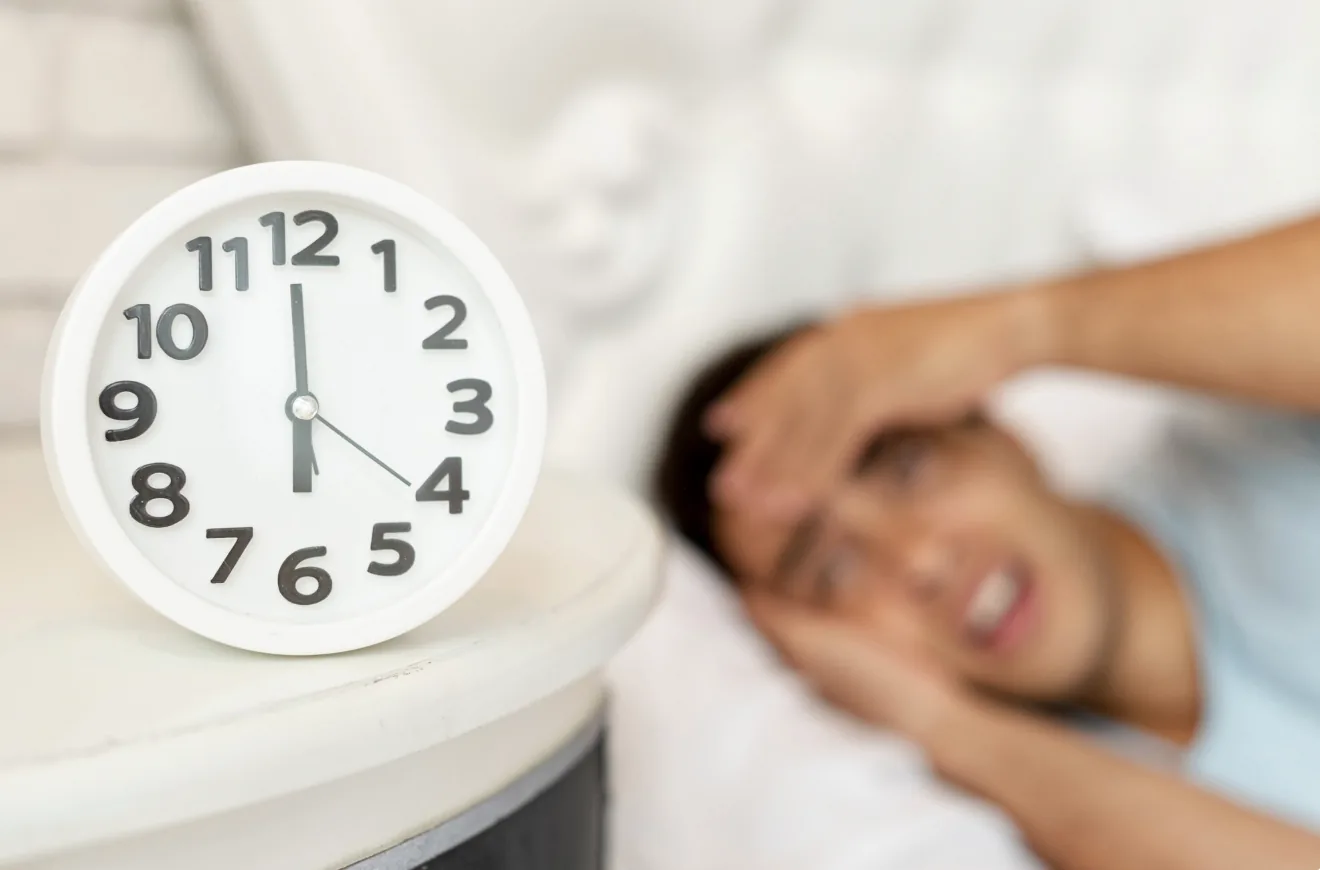
Your body has an internal clock called the circadian rhythm. It runs on a roughly 24-hour cycle, keeping track of when you should feel alert and when you should feel sleepy. The main cue that sets this rhythm? Light.
When you’re staring at your phone in bed, you’re exposing your eyes to bright blue light—the same type of light the sun gives off during the day. This tricks your brain into thinking it’s still daylight, so it holds off on releasing melatonin, the hormone that tells your body it’s time to wind down.
The result: your sleep cycle gets pushed back, just like when you travel west and adjust to a later time zone.
The Jet Lag Effect Without the Flight

Researchers call this “social jet lag”—when your lifestyle habits shift your sleep timing away from your natural rhythm. Instead of physically flying across the country, your phone creates the illusion of a time-zone shift in your brain.
The symptoms look familiar:
- Trouble falling asleep
- Waking up groggy
- Brain fog the next day
- Cravings for sugar and caffeine
Over time, this “mini jet lag” can add up, making it harder for your body to reset naturally.
A Healthier Evening Ritual

The good news is, you don’t need to ditch your phone entirely—you just need to change how you use it at night. Try these simple tweaks:
- Set a screen curfew – Even 30–60 minutes before bed can help melatonin kick in.
- Dim the light – Use night-shift mode or a warmer filter in the evenings.
- Swap the scroll – Replace endless feeds with an audiobook, podcast, or paperback.
- Signal your body – Pair the no-scroll time with a calming cue: herbal tea, stretching, or journaling.
A Small Shift, Big Rewards
Think of your sleep like a bank account. Every night of solid rest deposits energy, focus, and resilience into your health. Every late-night scroll that tricks your body clock is like a withdrawal. Too many withdrawals, and you end up running on empty.
So the next time you reach for your phone in bed, remember: you’re not just scrolling—you might be sending your brain on a red-eye flight without ever leaving home.
Here’s a thought: If your phone can trick your brain into jet lag, what other everyday habits might be shifting your internal clock without you realizing it?


What 10 Minutes of Walking Immediately After Meals Does to Your Blood Sugar?

The 60-Second Reset #01: A 10-Second Fix for Screen-Strained Eyes

Hot vs Cold Therapy: Harnessing Thermal Stress for Metabolic and Mental Resilience

The Vagus Nerve & Nervous System Regulation: Taming the Unseen Stress Response

The 50+ Turning Point: Why Midlife is Ground Zero for Long-Term Vitality

What’s One Piece of Health Advice That Actually Worked for You?

Can Small Sleep Changes Improve Mental Sharpness? Here’s What Researchers Are Learning

The Optical Dilation Trick: How Expanding Your Vision Resets Desk Eye Strain and Anxiety
The Vagus Nerve & Nervous System Regulation: Taming the Unseen Stress Response
Hot vs Cold Therapy: Harnessing Thermal Stress for Metabolic and Mental Resilience
-

 Fitness3 months ago
Unexpected Health Habit: Not a Diet or Supplement – Just One Everyday Habit Worth Noticing
-
 Health4 months ago
What Your Hands Quietly Reveal About Your Digestion (And How To Use It)
-
 Fitness4 months ago
5 Health Myths Most Adults Still Believe And What Actually Matters Instead
-

 Health3 months ago
Have You Ever Wondered Why Homemade Meals Rarely Taste the Same?
-
 Fitness4 months ago
Experts Reveal: The 1-Minute Routine That Improves Digestion Instantly
-
 Health3 months ago
“Lazy Meal Prep”: The easier way people are actually sticking to healthy eating
-
 Health4 months ago
You Slept 8 Hours… So Why Do You Still Feel Exhausted?
-
 Health2 months ago
How Many Steps a Day Actually Matter for Longevity – 5K or 15K?